
Copyright: Intellectual property of PORT ENERGY LOGISTIC GMBH, Hamburg
Copyright: Intellectual property of PORT ENERGY LOGISTIC GMBH, Hamburg
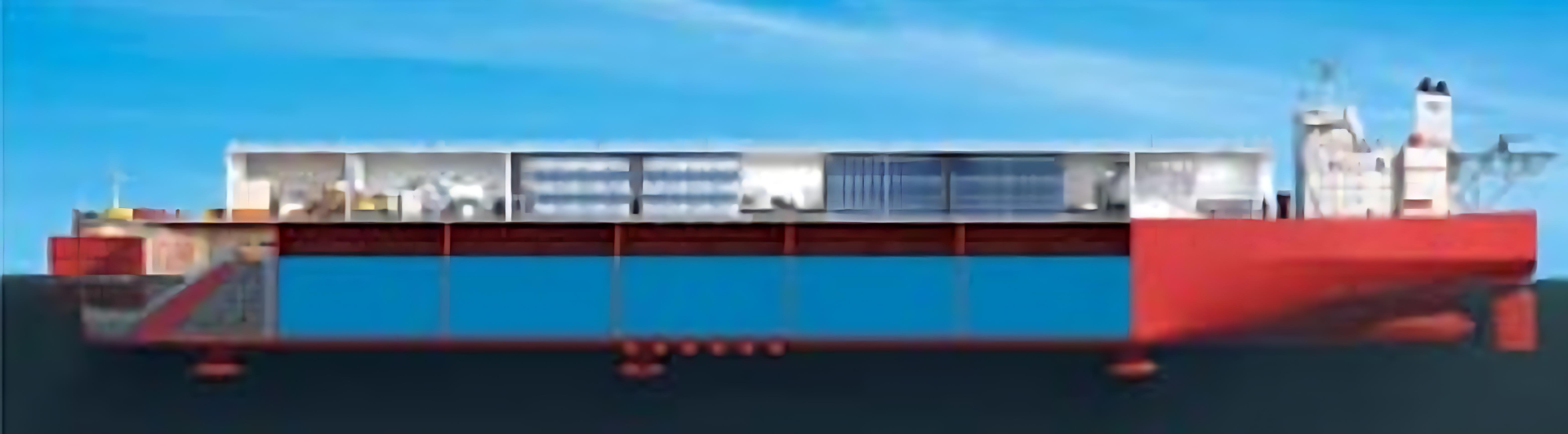
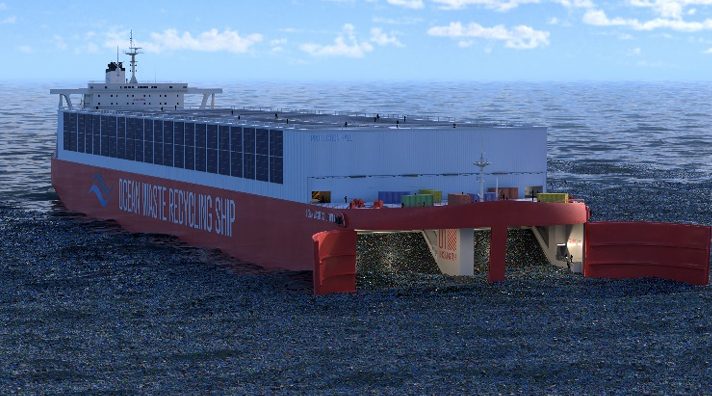
Developed by Port Energy Logistic GmbH Hamburg, this ship addresses six global challenges at once – from seawater desalination and plastic waste cleanup to renewable hydrogen production and climate change mitigation.
Length overall: 330 m Breadth moulded: 60 m Draught: 22.5 m Deadweight: 350,000 t Main Propulsion: 24 MW Power Plant: 12 × 5,000 kW (60 MW) Speed: 14 KN Life expectancy: 50+ years


No concentrate (brine) is pumped back into the sea. The Desalination Ship works according to the “ZERO LIQUID DISCHARGE” system. At the end of the desalination process, no brine remains on board — only pure microplastic-free potable water and microplastic-free salt.
Production of drinking water, around
350,000 m³ per day =
about 120 million m³ per year per ship.
The water quality is in line with WHO standards — and beyond.
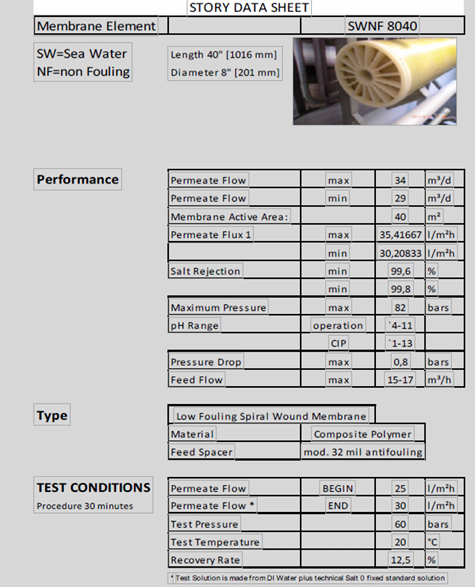
The seawater desalination plant works on the
RO (Reverse Osmosis) system, developed by a German
cooperation partner. Delivered turnkey, it benefits from
34 years of expertise in seawater desalination systems and membranes.
On board the ship we can produce distilled water for the further production of "green hydrogen". The production capacity is around 20,000,000 m³ per year. Using multi-stage flash evaporation (MSF) processes, we generate both distilled water and microplastic-free salt. Production can be scaled higher if required.

To protect the maritime environment, the ship produces microplastic-free sea salt using multi-stage flash evaporation (MSF) processes. This ensures environmentally safe salt production while contributing to sustainable ocean practices.
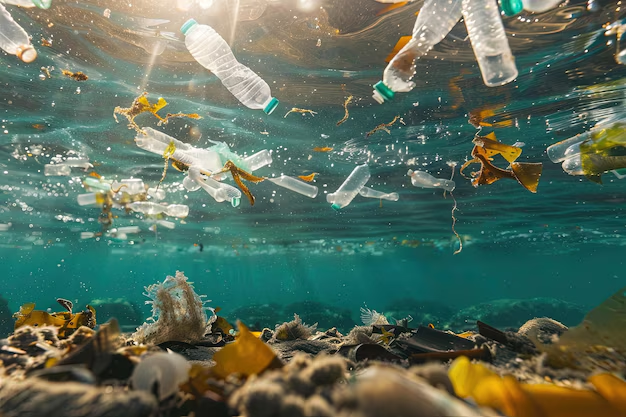
The ship is designed to clean approximately 3,060 km² of marine litter per year. Onboard, a special plant recycles syngas from collected marine waste, turning it into usable energy and reducing ocean pollution.

During seawater desalination, raw water is filtered down to the nano range using cyclone and ultra-filtration systems. Calculations show that approximately 108,000 tonnes of microplastics are removed per ship per year. All collected microplastics are recycled into syngas, contributing to energy recovery.
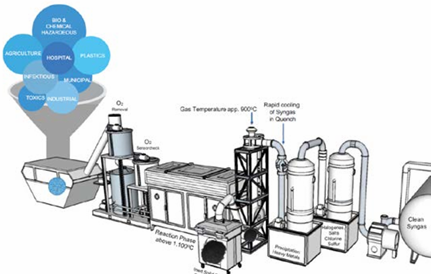
Ten high-temperature hydrolysis plants are installed onboard to recycle mixed waste, previously rinsed with freshwater, into syngas. Depending on the input, the syngas contains up to 70% hydrogen, which can be used to power the ship's engines, contributing to a sustainable energy cycle.
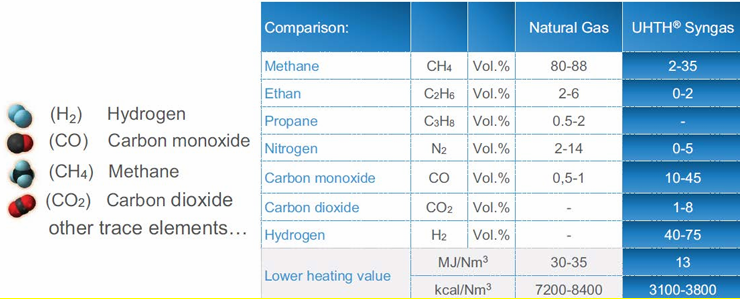
The syngas produced onboard is cleaner than most other technologies, showing a high hydrogen content for most feedstocks — up to >75% H2. This makes it a highly efficient and sustainable energy source for powering the ship's engines and other onboard systems.
The bow of the special ship is designed to open upwards for operational flexibility.
Cargo tanks, pipelines, pumps, filter pots, and other equipment are made entirely of stainless steel for durability.
(Note: some photos show the bow opening to the sides to confuse "free riders".)
On top of the seawater desalination plant (220 m × 60 m = 13,200 m²), the ship is equipped with photovoltaic elements and 165 parabolic mirrors that capture sunlight and convert it into electrical energy.
This energy operates all systems on board, with excess stored in energy storage media for night-time operation.
All engines on the special ship are dual engines that can be operated with H2 or LNG, supplied by a German company.
All other innovations were developed by Port Energy Logistic GmbH.
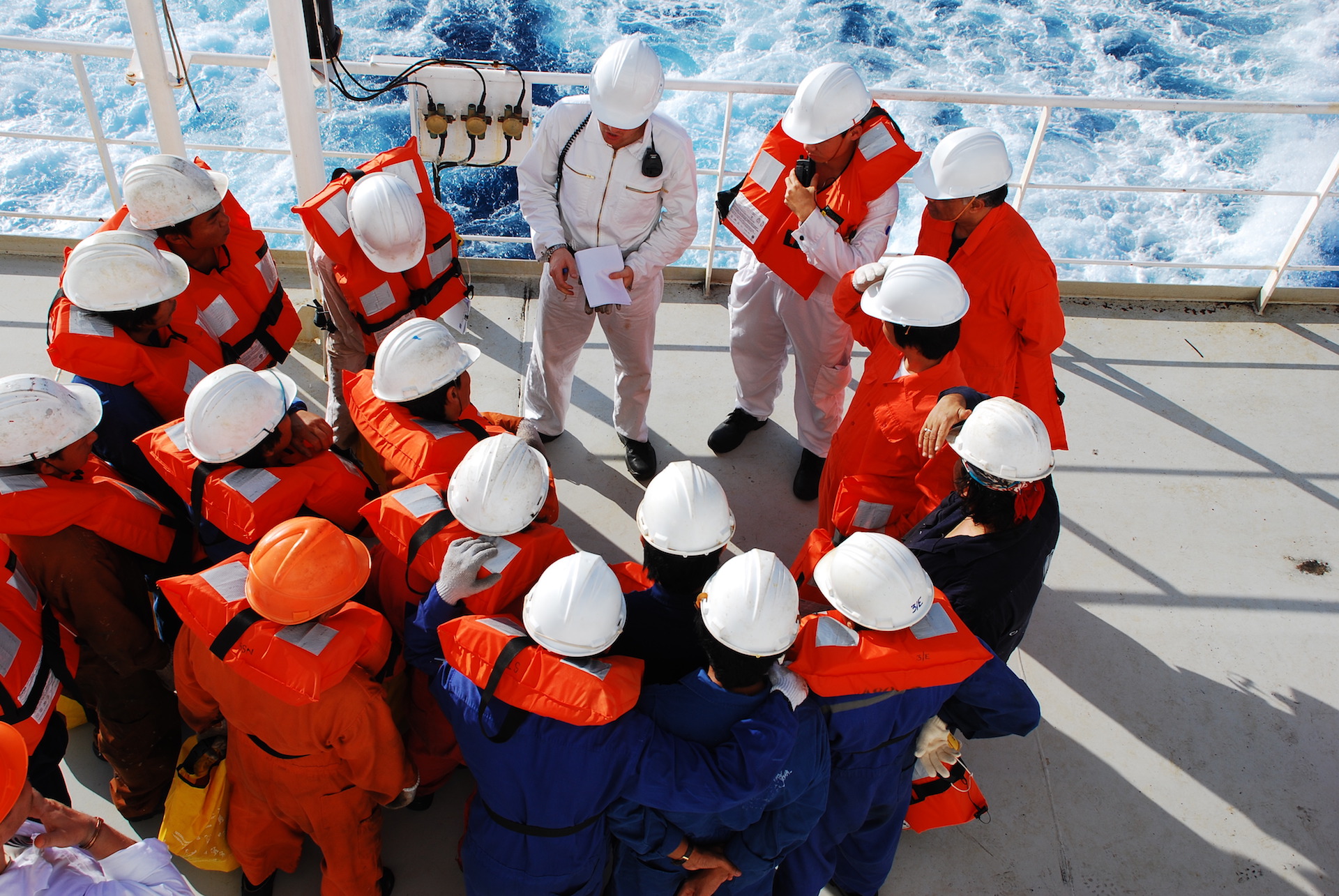
The ship is operated by a highly skilled crew of 100 people.
They receive excellent salaries, reflecting the importance of their qualifications for the ship’s success.
A second crew is planned to cover vacations, sick leave, and other absences.
Crew members are trained and educated in their respective countries to maintain top-level operational standards.
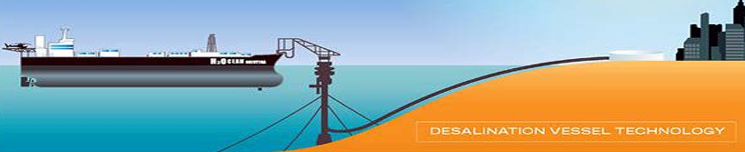
The ship delivers drinking water via a mooring buoy connected to an underwater pipeline that leads directly to storage tanks on land.
This system ensures continuous and reliable supply, maintaining water quality and safety from ship to shore.
Potable water is discharged via a mooring buoy, where the vessel docks with precision using eight maneuvering units rated at 2,500 kW each.
A crane on the bow lifts and secures the anchor chain, then the end of the underwater pipeline (8–10 km) is connected.
Water is stored in a tank field consisting of six 100,000 m³ storage tanks, linked to the existing infrastructure. Costs for these tanks are covered by the state, ensuring reliable and safe delivery of drinking water.